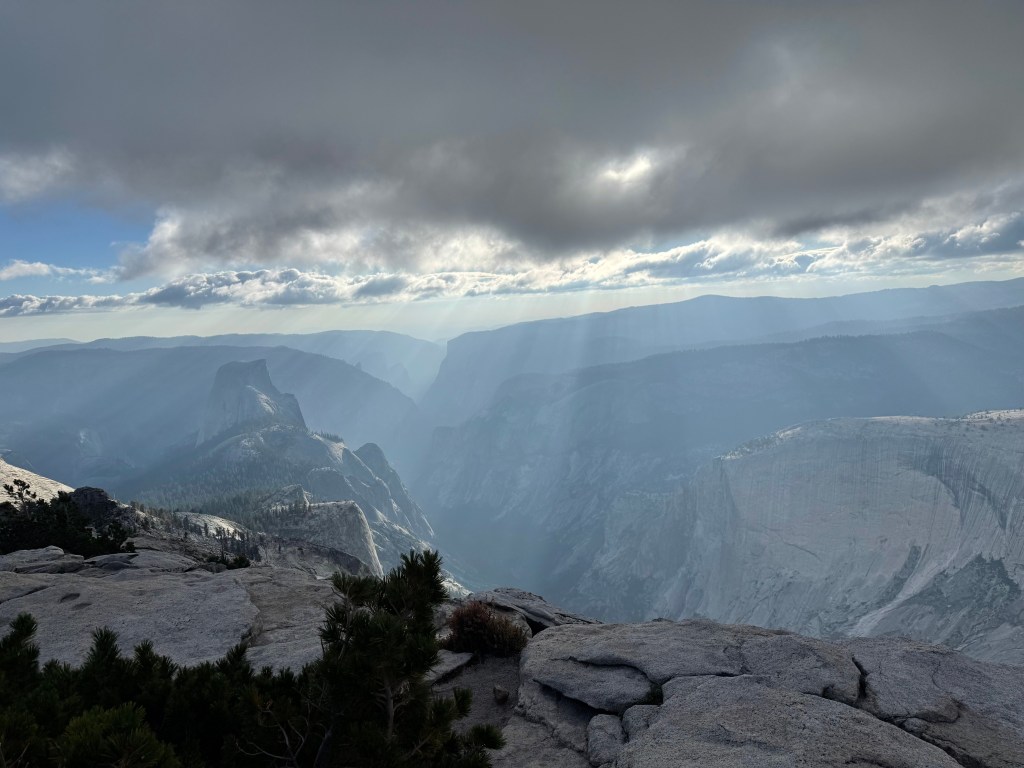
I revisited Liu Cixin’s The Mountain, and it made me feel how extraordinary it is to be living in the age of AI.
One of the greatest differences between humans and other animals is that we are willing to explore things beyond the immediate needs of survival. At least some of us will always try to understand a world larger than the one we already know.
We study biology, yet in many ways it is biology itself that confines us. Attention is limited. We need to eat and sleep. We can only focus deeply on one thing at a time. Our lifespans are finite. Passing knowledge from one generation to the next is slow, and any fundamental increase in our biological intelligence would require thousands, perhaps tens of thousands, of years of natural selection.
AI is different. It is something humanity has created that may eventually transcend the biological limitations of humanity itself.
Centuries from now, when people — whether still biological or no longer entirely so — look back through history, I suspect they may mark these years as the beginning of a profound transformation.
Perhaps within only a few years, humans will be surpassed across all domains. But I do not think that would make us stop. Humans have never pursued only survival. We also seek discovery, expansion, and the possibility of going beyond ourselves.
And in an age of transformation, those who are willing to explore the unknown and help push the frontier forward will be the people history remembers.
There is a passage in The Mountain that captures this beautifully:
“What did you come here for?” he asked.
We were only passing by. We saw that there was an intelligent civilization here, so we thought we would find someone to talk to. Whoever reached the summit of this mountain first would be the one we spoke with.
The mountain is there. Sooner or later, someone will climb it.”
Yes. Climbing mountains is part of the nature of intelligent beings. They want to stand higher and see farther, even though doing so is not necessary for survival. Take you, for example. If survival were your only concern, you would have fled far away from this mountain. And yet you climbed it.
Evolution has given intelligent civilizations this desire to ascend for some deeper reason, though we still do not know what that reason is.
Mountains are everywhere.
And all of us are still standing at the foot of one.
Perhaps that is what feels most meaningful about living through this moment.
Humanity may not always remain the most intelligent form of intelligence in existence. But perhaps that was never the point.
The mountain is there.
And someone will always climb it.
Sept 23, 2026 in Los Angeles
重温了刘慈欣的《山》。感觉现在能处在AI的时代,真是伟大的事情。
人类和其他动物一个很重要的区别就在于:人类会去探索那些并不直接服务于生存的事情。至少总会有一部分人,想去看自己认知边界之外的世界,想知道更远处还有什么。
我们研究生物,但某种意义上,真正困住我们的也正是生物。
Attention is limited。我们的注意力有限,需要吃饭睡觉,同一时间也只能专注于很少的事情。我们的寿命有限,而且我们建立起的知识体系,还要依赖语言、文字和教育,再花几十年时间传递给下一代。而如果想从生物学意义上显著提升人类本身的智力,还需要经历成千上万年,甚至更漫长的自然选择。
AI 不一样。
它也许是人类第一次真正创造出一种,有可能突破这些生物学限制的存在。它不需要像人一样被困在有限的寿命、有限的注意力和缓慢的知识传递之中。这是人类把“认知”本身第一次向生物体之外延伸。
几百年后的人——无论那时的“人”是否还是“生物”——在回看历史的时候,也许会把我们现在身处的这几年,标记为某场巨大变革开始的年代。也许从现在开始几年之后,人类就会被全面超越。但那并不意味着人类会停止探索。因为人类追求的不只是生存。我们还会追求发现,追求理解,追求开拓,追求超越自己本身的边界。
而在真正发生变革的时代,那些愿意去探索未知、愿意推动边界的人,也是会被历史记住的人
《山》里有这么一段话:
「你们到这里来干什么?」他问。
我们只是路过,看到这里有智慧文明,就想找人聊聊,谁先登上这座山顶我们就和谁聊。
「山在那儿,总会有人去登的。」
是,登山是智慧生物的一个本性,他们都想站得更高些,看得更远些,这并不是生存的需要。比如你,如果为了生存就会远远逃离这山,可你却登上来了。进化赋予智慧文明登高的欲望是有更深的原因的,这原因是什么我们还不知道。
山无处不在,我们都还在山脚下。
这正是生活在这个时代最让我感到兴奋的地方。人类未来也许不再是世界上最聪明的存在。但这可能从来都不是最重要的事情。
重要的是,山在那里。
而总会有人去登。
2026年9月23日,洛杉矶

